Tuesday, March 30, 2010

Multimedia: Quantum Dots

Quantum Dots and a Brave New World
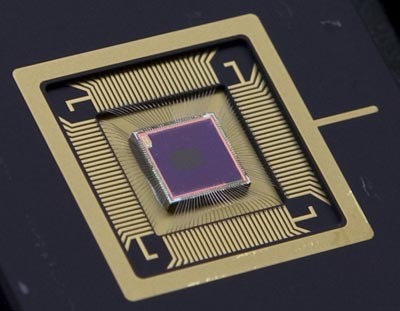
Phones are changing yet again. I wonder what this will mean to artistic photographers like Dan Buchanan whom I referred to in our previous blog. What does this mean in general? If camera phones will take high resolution images how does that affect privacy as more people try becoming paparazzi and youtubers taking photos and videos of high quality any where they go. This new technology can make camera phones as good or better than any cameras we have now.
Quantum Dots Promise Pro Photos from Cell Phones
The days of swapping grainy cell phone photos that look like they came off a 7-11 security camera may soon be over – if you believe the hype. Silicon Valley startup InVisage Technologies claims that its new “quantum dot” image sensors, which use a totally revamped technique, will snap photos four times better than existing mobile camera sensors, and fit in the same area.
The inventor of the technology has a page explaining the significance and how it works

Communications: Internet is biggest threat to endangered species, say conservationists


The Guardian Newspaper 26.03.10
Internet is biggest threat to endangered species, say conservationists
"The internet has emerged as one of the greatest threats to rare species, fuelling the illegal wildlife trade and making it easier to buy everything from live lion cubs to wine made from tiger bones, conservationists said today."
http://www.guardian.co.uk/environment/2010/mar/21/endangered-species-internet-threat
Wildlife Trade on the Web
The Internet’s very anonymity makes it impossible to quantify the scale of the illegal online trade in protected and endangered species.  However, the recent IFAW investigations listed below reveal how vast quantities of wildlife products and live animals are being traded illegally on the Internet - a growing and lucrative trade that is driving the world's most endangered species to the brink of extinction and causing untold suffering.


I know I am not one of the people doing this and maybe your not either but it is good to be aware of what can happen when greed gets in the way of common sense. Looking after our environment is good common sense. Nobody wants to live in a sewer. Lets look after our environment now before it becomes one.
Regards Graham Betts
also http://bettscomputers.com/communications.htm
.

IPT HSC Multimedia: iPhone as a Serious Camera


iPhone as a Serious Camera
This is a brilliant example of convergence. I remember as a boy how a phone lived in the lounge room. many people didn't even have phones. They had a bell inside that used to ring. Now not only do we carry phones in our pockets but they are becoming serious tools by which people organise themselves, write emails, write letters, play games and now make serious art. The mobile phone and in particular the iPhone is a serious multimedia tool.
The March/April 2010 edition of Phototechnique Magazine has an interesting article on the iPhone as a serious camera that can produce impressive results. Artist photographer Dan Burkholder has produced some beautiful and inspiring works using the iPhone and its apps. No photoshopping. No fancy computer apps just a photographer and what Dan Burkholder calls "The Polaroid-Holga" of the 21st century. He has taught digital imaging workshops for fifteen years and written books that have reputedly, " become a standard resource in the fine art photography community." The author of the article, Dan Burkholder, describes his use of the iPhone as ,"a personal journey" of discovery as he becomes "seduced".
About the article Phototechnique Magazine says the following
If you’ve never taken a camera-phone seriously, now’s the time. Dan Burkholder, delighted with his own unexpected results with iPhone photography, begins his exploration of the medium and shows high quality images shot with the camera he carries in his pocket.  
Dan Burkholder creative photography, photo montage, digital effects

and Then go to Dan's blog and if you have any artistic spirit you will want to go away and try it out for yourself:

"The images on this page were captured and processed on an Apple iPhone through an assortment of inexpensive imaging apps. The iPhone is more than just a tiny camera on a cell phone. For the first time we have both camera and darkroom in the palm of our hands. Dan’s iPhone workshops will cover the steps used to capture and process images like these and then print them on fine art digital paper and canvas."

E-Paper Magazine included on Front Page of Esquire


Digitised cover for paper magazine.

The American version of Esquire magazine will be trialling digital front covers in September.

A specially developed screen and battery will be manually inserted into the front cover of 100,000 copies of magazine flashing the headline “welcome to the 21st Century”. The screen will also be used in the inside front cover to carry and advertisement for Ford, which is sponsoring the project.

“I hope it will be in the Smithsonian,” said David Granger, Esquire’s editor in chief, in a recent interview with the New York Times.
(quoted from Australian PC Authority Magazine)

_________________________________________________________________________________________

FW: HSC IPT: Communications and Ethics

This blog focus' on Communications and Ethics


New Scientist this week has some really useful articles for IPT HSC students. Below is a selection

Could forcing computer owners to keep their machines up to date with the latest security software help stop cybercrime in its tracks?
Should you have any further queries please do not hesitate to contact me.

How a pair of brazen scammers made a cool $163 million from our online security fears – and how the law finally shut them down


Saturday, March 27, 2010

Multimedia and Electronic Paper

Its been almost 2 and a half years since Kindle erupted onto the world stage. What is the future of E-Paper? This entry examines the future of E-Paper. Kindle 2 has been around for over 6 months and the pundits appear to like it. What does it all mean.

Quote

The colourful promises of electronic paper - tech - 19 October 2009 - New Scientist
The colourful promises of electronic paper 19 October 2009 by Duncan Graham-Rowe Magazine issue 2730WITH the international launch of Amazon's Kindle reader this week, perhaps electronic books will become the must-have present this year. But even as we unwrap our shiny new e-readers, we may be forgiven for wondering how long it will be before the long-promised colour versions are available. Moreover, with multifunctional devices such as the iPhone becoming the norm, how soon could these e-readers make the breakthrough to display video? Currently, the leading e-readers use proprietary "electrophoretic" display technology from a firm called E-Ink - a 12-year-old spin-off from the Massachusetts Institute of Technology. While this approach has paved the way for monochrome displays, it is struggling to move beyond them. E-Ink has yet to deliver on its promise of colour displays that retain the fine resolution of its monochrome ones, never mind video. So could other e-paper displays achieve good-quality colour and video while also maintaining the ...


An early phase of E-Paper back in the 1970s

Quote

The Future of Electronic Paper
E-paper History: An Interview with Nick Sheridon, Father of E-paper. In the 1970s, Xerox Palo Alto Research Center (Xerox PARC) was a powerhouse of innovation. Many aspects the modern computer, namely the mouse, laser printer, Ethernet, GUI, computer-generated color graphics, as well as a number of important computer languages, were invented at PARC around that time. Yet another development, nearly lost among those important breakthroughs, was invented in 1974 by PARC employee Nicholas K. Sheridon. The Gyricon, a Greek term for rotating image, was to be new display technology for the Alto personal computer; eventually, it became the basis for modern e-paper technology.Nearly 35 years later, TFOT sat down with Nick Sheridon to ask him about his historic invention.


E Ink Corporation describe how E-Paper works

Quote

E Ink Corporation | Technology | Electronic Paper Displays
What is an EPD? An Electronic Paper Display is a display that possess a paper-like high contrast appearance, ultra-low power consumption, and a thin, light form. It gives the viewer the experience of reading from paper, while having the power of updatable information. EPDs are a technology enabled by electronic ink - ink that carries a charge enabling it to be updated through electronics. Electronic ink is ideally suited for EPDs as it is a reflective technology which requires no front or backlight, is viewable under a wide range of lighting conditions, including direct sunlight, and requires no power to maintain an image.


Quote

The Future of Electronic Paper
The Future of Electronic PaperBy: Nick Mokey •August 20, 2009Share It's already revolutionized the digital book, but what else will this modern marvel bring us? We were supposed to get our "paperless office" over a decade ago. The prolifieration of Internet access and the birth of new file formats for distributing documents over the Web promised to finally banish paper from the desk once and for all. But look around a modern-day office and you’ll still find desks plastered in pulp. The problem: computer monitors suck for reading. They flicker and flash, look blurry compared to paper, and suck down loads of power just to display the same simple text.


Quote

The Kindle and the End of the End of History - O'Reilly Radar
The Kindle and the End of the End of Historyby Jim Stogdill | @jstogdill | comments: 24 This morning I was absentmindedly checking out the New York Times' bits blog coverage of the Kindle 2 launch and saw this: “Our vision is every book, ever printed, in any language, all available in less than 60 seconds.” It wasn't the main story for sure. It was buried in the piece like an afterthought, but it was the big news to me. It certainly falls into the category of big hairy audacious goal, and I think it's a lot more interesting than the device Bezos was there to launch (which still can't flatten a colorful maple leaf). I mean, he didn't say "every book in our inventory" or "every book in the catalogues of the major publishers that we work with." Or even, "every book that has already been digitized." He said "every book ever printed."


Wikipedia gives a history of the Kindle

Quote

Amazon Kindle - Wikipedia, the free encyclopedia
Amazon Kindle is a software and hardware platform developed by Amazon.com (subsidiary Lab126) for the rendering and displaying of e-books and other digital media.[1] Three hardware devices, known as "Kindle," "Kindle 2," and "Kindle DX" support this platform. Kindle software applications exist for Windows, iPhone OS, BlackBerry and Mac OS X. Amazon's first hardware device, the Kindle First Generation, was only released in the United States on November 19, 2007.


Superabundance of Data

28 March

Data superabundance

 Todays blog deals with the information overload. How is it affecting us as individuals, costs to business to try to store and make sense of it and a cultural cost to us as living beings. Are you spending huge amounts of time just trying to organise your paperwork? The term for this overload is "superabundance of data".

Quote

From gatherers to analysts - the new insight value chain? | Blog
We are moving from a world where information was scarce to one where it is becoming superabundant, a world where a megabyte (2 to the power of 20 bytes) used to be a worryingly large amount of information to analyse but where we are now starting to worry about dealing with Yottabytes - that 2 to power of 80 bytes!

Quote

Technology: The data deluge | The Economist
EIGHTEEN months ago, Li & Fung, a firm that manages supply chains for retailers, saw 100 gigabytes of information flow through its network each day. Now the amount has increased tenfold. During 2009, American drone aircraft flying over Iraq and Afghanistan sent back around 24 years’ worth of video footage. New models being deployed this year will produce ten times as many data streams as their predecessors, and those in 2011 will produce 30 times as many.

Lets get this into perspective:

The Pointed End of the Spork » Data Superabundance — the coming storm
.In 2006, the amount of digital information created, captured, and replicated was … about 3 million times the information in all the books ever written... The digital universe in 2006 could be likened to 12 stacks of books extending from the Earth to the sun.  (A Forecast of Worldwide Information Growth Through 2010 — IDC, March 2007)

Examining Ethics

Quote

Technology: The data deluge | The Economist

Examples abound of databases being stolen: disks full of social-security data go missing, laptops loaded with tax records are left in taxis, credit-card numbers are stolen from online retailers. The result is privacy breaches, identity theft and fraud. Privacy infringements are also possible even without such foul play: witness the periodic fusses when Facebook or Google unexpectedly change the privacy settings on their online social networks, causing members to reveal personal information unwittingly. A more sinister threat comes from Big Brotherishness of various kinds, particularly when governments compel companies to hand over personal information about their customers. Rather than owning and controlling their own personal data, people very often find that they have lost control of it.

The best way to deal with these drawbacks of the data deluge is, paradoxically, to make more data available in the right way, by requiring greater transparency in several areas. First, users should be given greater access to and control over the information held about them, including whom it is shared with. Google allows users to see what information it holds about them, and lets them delete their search histories or modify the targeting of advertising, for example. Second, organisations should be required to disclose details of security breaches, as is already the case in some parts of the world, to encourage bosses to take information security more seriously. Third, organisations should be subject to an annual security audit, with the resulting grade made public (though details of any problems exposed would not be). This would encourage companies to keep their security measures up to date.

How about the affects on us as individuals

Quote

http://www.namingandtreating.com/?p=16774
The ’superabundance’ of data is changing not only the amount of available content we access online, but also our ability to store all of it. This statement also seems to reflect what may be going on with us psychologically right now as we feel overwhelmed and exhausted, trying to define how much content is enough or worth keeping. It represents a combined process of content and cognitive/emotional overload. As we over saturate ourselves in content, time and better mechanisms for searching and disseminating content will determine how effective we can be in using the data we collect.

Other References

disruptorMonkey: Data Superabundance, | Deduplication could be the answer to "too much data"